
 Image 1 of 1
Represented By: Sallyanne Sweeney
His debut Motherfoclóir: Dispatches from a Not-So Dead Language won in the popular non-fiction category at the Irish Book Awards in 2017. The sequel, Craic Baby: Dispatches From A Rising Language was published in 2018. He has written for The Journal, the Irish Times, the Sunday Business Post, the Big Issue and The i as well as turning up in The Washington Post, The Guardian and National Geographic.
Darach presented the Motherfoclóir Podcast on the Headstuff Podcast Network from 2017 to 2021, which was listed as one of Ireland’s top podcasts in The Sunday Times and RTÉ. He ran the Irish Word of the Week Series for the Irish Arts Center in New York, which ran during Covid-19 lockdown.
Darach created the popular @theirishfor account on Twitter, described by President Michael D Higgins as “such an innovative, humorous but substantial project to promote our love and interest in our native language”.
He is married with two children.
Represented By: Sallyanne Sweeney
His debut Motherfoclóir: Dispatches from a Not-So Dead Language won in the popular non-fiction category at the Irish Book Awards in 2017. The sequel, Craic Baby: Dispatches From A Rising Language was published in 2018. He has written for The Journal, the Irish Times, the Sunday Business Post, the Big Issue and The i as well as turning up in The Washington Post, The Guardian and National Geographic.
Darach presented the Motherfoclóir Podcast on the Headstuff Podcast Network from 2017 to 2021, which was listed as one of Ireland’s top podcasts in The Sunday Times and RTÉ. He ran the Irish Word of the Week Series for the Irish Arts Center in New York, which ran during Covid-19 lockdown.
Darach created the popular @theirishfor account on Twitter, described by President Michael D Higgins as “such an innovative, humorous but substantial project to promote our love and interest in our native language”.
He is married with two children.
Author: Darach Ó Séaghdha
Genres: Non-Fiction
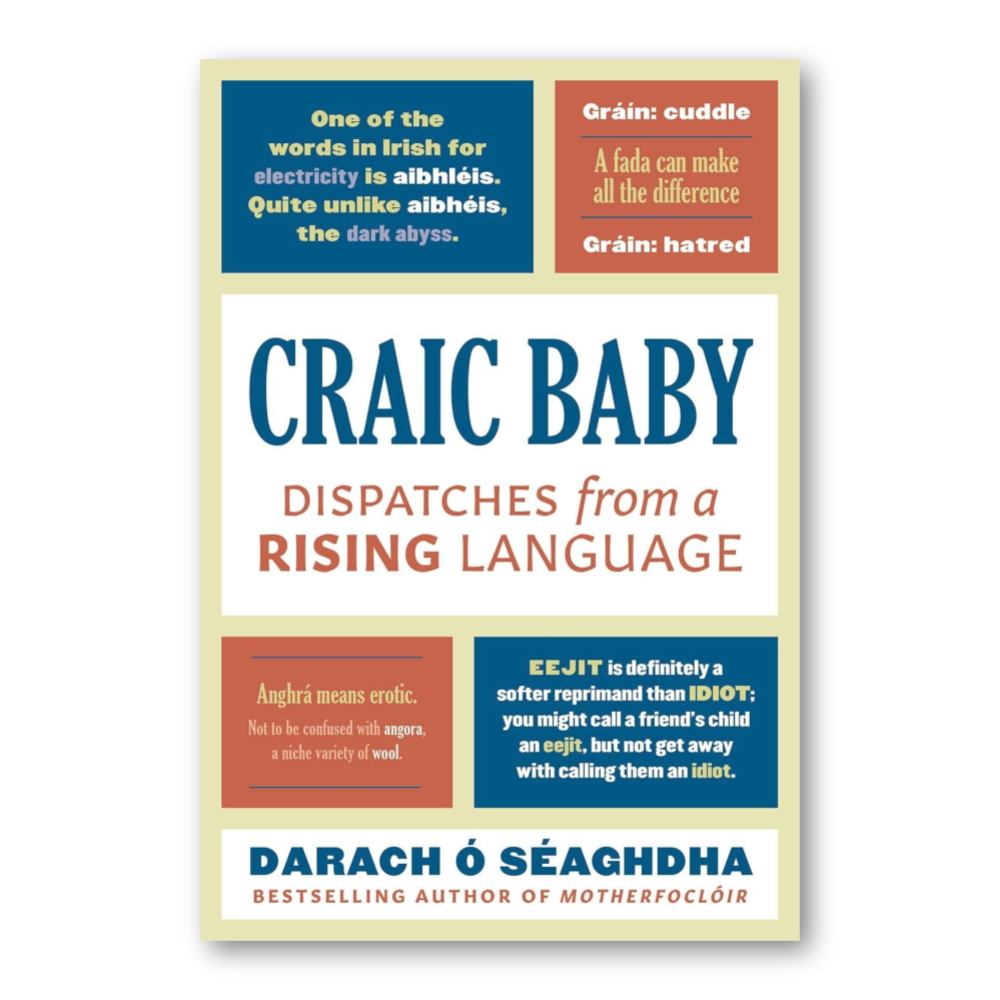
When we talk about saving or supporting a language do we mean the musical combination of syllables, or something more profound? How do new words enter a language, and what is the relationship between that strange dialect called Hiberno-English and its parent language?
Craic Baby picks up exactly where Motherfoclóir left off and explores the very new and very old parts of the Irish language from a personal perspective. While Motherfoclóir was steeped in memory and a father-son relationship,Craic Baby hinges on the beginnings of a father-daughter relationship, and how watching a child learn to communicate changes how you think about language.
Craic Baby will share more Irish words and issues connected to the language, in the same style as Motherfoclóir, but treated with greater confidence and more depth.
Author: Darach Ó Séaghdha
Genres: Non-Fiction
Popular Non-Fiction Book of the Year 2017 - Irish Book Awards
‘Motherfoclóir’ [focloir means ‘dictionary’ and is pronounced like a rather more vulgar English epithet] is a book based on the popular Twitter account @theirishfor.
As the title suggests, ‘Motherfoclóir’ takes an irreverent, pun-friendly and contemporary approach to the Irish language. The translations are expanded on and arranged into broad categories that allow interesting connections to be made, and sprinkled with anecdotes and observations about Irish and Ireland itself, as well as language in general. The author includes stories about his own relationship with Irish, and how it fits in with the most important events in his life.
This is a book for all lovers of the quirks of language.